Caesar Cipher: The Ancient Secret That Teaches Modern Security
8th May 2026
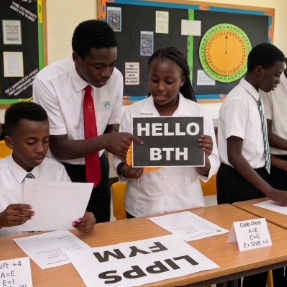
This week, our Year 9 students stepped into the shoes of Roman spies. They learned the Caesar Cipher – a simple trick where each letter shifts by three positions (A→D, B→E). They encrypted secret messages, swapped them with partners, and decrypted them successfully.
Example: HELLO BTH becomes LIPPS FXL after Shift 4
What did students learn?
First, encryption transforms data so only the right person can read it. Second, every cipher needs a "key" – here, the shift amount. Third, without the key, a message has no meaning. They also discovered a weakness: only 25 possible shifts exist.
Why does this matter today?
Every time you send a WhatsApp message, buy something online, or log into school email, encryption protects you. Modern encryption (AES, TLS) works on the same principle – but with keys so enormous that breaking them would take billions of years.
How does this impact students now and in the future?
Today, they understand why "password123" is unsafe and why HTTPS matters. Tomorrow, some may become cybersecurity experts, ethical hackers, or cryptographers – protecting our digital world. This single lesson plants the seed for careers defending privacy, stopping hackers, and building safer technology.
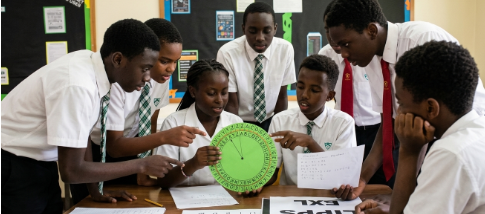
Students didn't just work alone. They encrypted messages using different keys – some used +3, others +4, +5 or +7. They swapped ciphertexts with partners but kept their keys secret. The challenge? Decode the message without knowing the shift. Some tried every possible key (brute force). Others looked for common letters. A few pairs created 'decoding races' – who could crack the other's message first? This is exactly how real cryptanalysts work: testing, guessing, and collaborating to break codes.
One small shift. One giant leap for digital safety.